How to Write Musical Satire: Singing Truth to Stupid
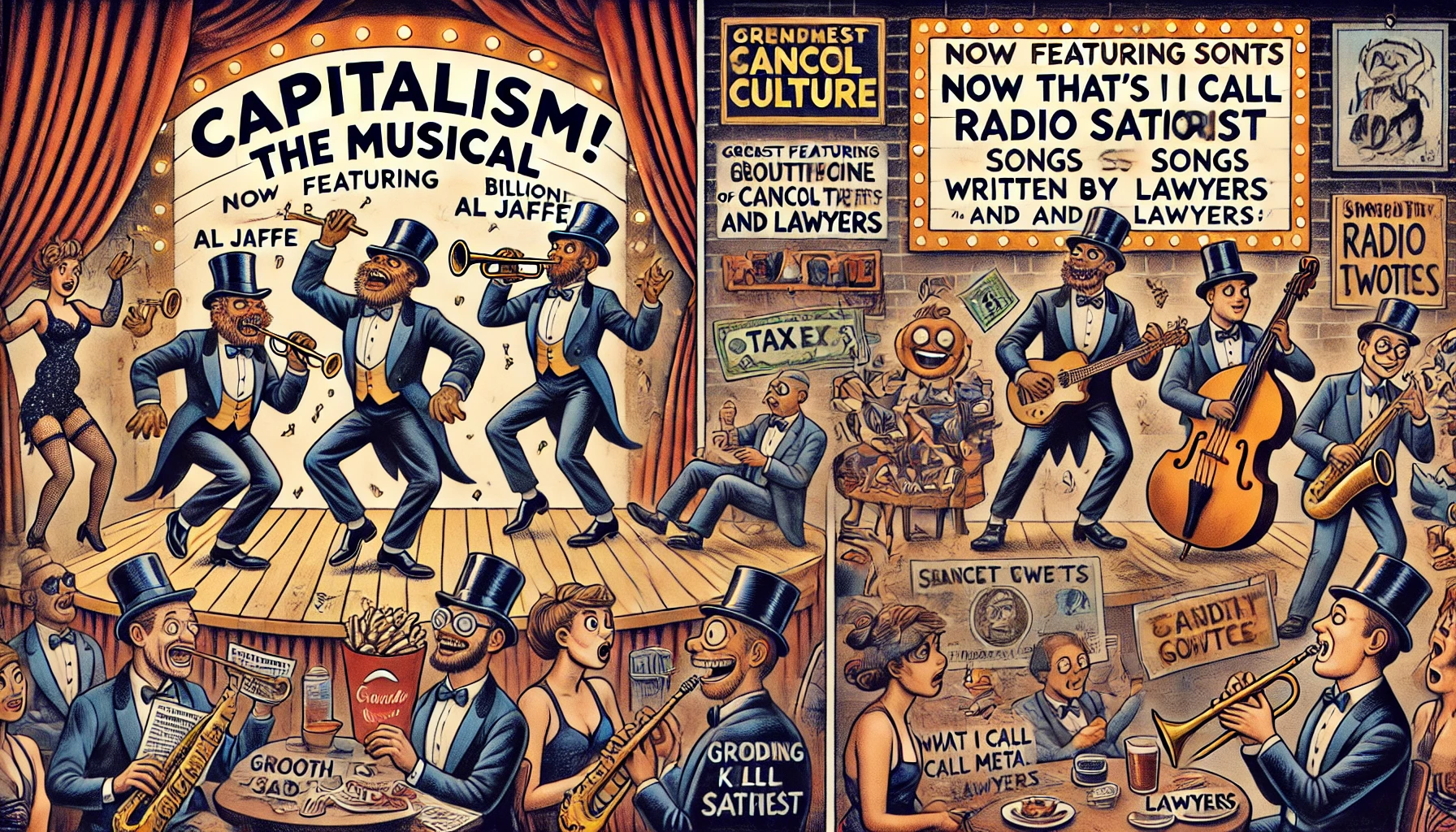
Musical satire is when comedy puts on a costume, grabs a microphone, and belts its rage at society in perfect pitch. It’s Broadway meets burn book. A jazz hand with a middle finger. The song you hum while the empire crumbles. Whether you’re mocking politics, pop culture, capitalism, or cafeteria etiquette, musical satire lets you sneak the truth into people’s heads—one show tune at a time.
From Avenue Q to South Park: Bigger, Longer & Uncut, from Spamilton to TikTok musical rants, musical satire is one of the most powerful and joyfully chaotic storytelling weapons in comedy’s arsenal.
So how do you write a satirical musical masterpiece? Let’s raise the curtain.
What Is Musical Satire?
Musical satire is the use of music—whether in stage shows, songs, videos, or film—to parody, mock, or critique real-life events, institutions, cultural norms, and human behavior. It combines theatricality with social commentary and exaggeration with melody.
If regular satire is a sharp pencil, musical satire is that pencil turned into a sword—and choreographed.
Why Musical Satire Works So Well
1. It Goes Down Easy
You can say the most offensive truth if you’re harmonizing while doing it.
2. It’s Inherently Ridiculous
People bursting into song already defies reality. Adding sarcasm just completes the illusion.
3. Music Affects Emotion
The juxtaposition of serious musical composition with absurd lyrics creates emotional whiplash—and that’s comedy gold.
4. It’s Repeatable
Catchy satire gets stuck in the brain. That’s not just entertainment—it’s propaganda with a piano.
Classic Examples of Musical Satire
| Show or Artist | Satirical Target |
|---|---|
| Avenue Q | Adulting, racism, internet addiction |
| The Book of Mormon | Religion, missionary work |
| South Park Movie | Censorship, war, parental outrage |
| Spamilton | Broadway elitism, Lin-Manuel Miranda |
| Bo Burnham: Inside | Mental health, influencer culture, internet decay |
How to Write Musical Satire That Slaps and Stings
Step 1: Choose What You’re Mocking
Musical satire needs a clear target. Some juicy options:
-
Institutions (Congress, churches, megacorps)
-
Trends (wellness, NFTs, performative activism)
-
Ideologies (“grindset” culture, self-care capitalism)
-
People (CEOs, influencers, ex-boyfriends who vape)
Ask: What’s ripe, ridiculous, and widely recognizable?
Step 2: Pick the Musical Style That Contradicts the Message
Satire lives in contrast.
| Target | Musical Style You Might Use |
|---|---|
| Political corruption | Bright Broadway showstopper |
| Billionaires in space | Gospel choir number |
| Workplace toxicity | Peppy Disney-style “I Want” song |
| Apocalyptic climate denial | Beach party surf rock |
Example:
A cheerful ukulele tune called “Oops! I Privatized the Ocean”
Step 3: Structure the Song for Satire
| Section | Purpose |
|---|---|
| Verse 1 | Set up the situation, make it sound reasonable |
| Chorus | Drop the satirical hammer—this is your punchline |
| Verse 2 | Heighten the absurdity, contradict earlier logic |
| Bridge | Twist or emotional “fake” truth |
| Final Chorus | Bigger, bolder, unhinged—leave with a bang |

Satirical Lyric Techniques
1. Ironic Juxtaposition
Sweet melodies + horrifying lyrics = unsettling hilarity.
“Let’s build a mall on sacred ground—progress makes the spirits proud!”
2. Over-Enunciation
Use hyper-formal diction to mock pretension.
“Allow me to commodify my existential dread in four-part harmony.”
3. List Songs of Nonsense
Inspired by “Modern Major General,” these build comic momentum.
“I recycle tweets and avocado skins, I ghost all my therapists after three wins…”
4. Malapropism and Wordplay
Make your character sound confident but wrong.
“I’m a certified epistemologist of vibes.”
Satirical Songwriting Prompts
-
Write a showtune called “I’m So Offended I Don’t Even Know Why”
-
A romantic duet between two influencers trying to go viral
-
An upbeat finale where billionaires colonize Mars and forget Earth exists
-
A protest chant turned into a sales jingle
-
A villain song from your anxiety personified as your manager
Musical Satire vs. Parody: What’s the Difference?
| Feature | Musical Satire | Musical Parody |
|---|---|---|
| Purpose | Social or political critique | Mimicry for humor |
| Original Music? | Often yes | Often borrows from real songs |
| Depth | Multilayered (jokes + commentary) | Surface-level (funny, but no critique) |
| Tone | Sarcastic, subversive, pointed | Playful, familiar, affectionate |
Example:
-
Musical Satire: “Unworthy of Your Love” (Assassins)
-
Parody: “Amish Paradise” (Weird Al)
Both rule. Only one starts revolutions.
Writing Satirical Musicals for the Stage
Want to write an entire musical satire?
Here’s Your Toolbox:
-
Opening Number: Establish your ridiculous world
-
“I Want” Song: What does your protagonist think they want? Make it shallow.
-
Villain Song: Show how capitalism sings in three-part harmony
-
11 o’clock number: Emotional fakeout—“Maybe I am the problem?”
-
Finale: The world burns down in a jazz hands crescendo
Tips for Performing Musical Satire
-
Sing Seriously – Let the audience laugh. You deliver it straight.
-
Embrace Theatricality – Big gestures, bigger irony.
-
Break the Fourth Wall – Look the audience dead in the eye and tell them it’s their fault.
-
Repeat Absurdity – Repetition makes the joke burn deeper.
What the Funny People Are Saying
“Satire in music is like hiding broccoli in cheesecake.”
— Bo Burnham
“If you can rhyme ‘oligarch’ with ‘dog park’ and still get applause, you’ve won.”
— Sarah Silverman
“The world’s on fire—might as well sing in key.”
— Desi Lydic
Disclaimer
This article was composed by two real humans: one is the world’s oldest tenured professor who writes tap numbers about fossil fuels, and the other is a 20-year-old philosophy major turned dairy farmer who once rewrote Les Misérables to be about lactose intolerance.
No musicals were harmed. Just monetized.