
CAPE TOWN
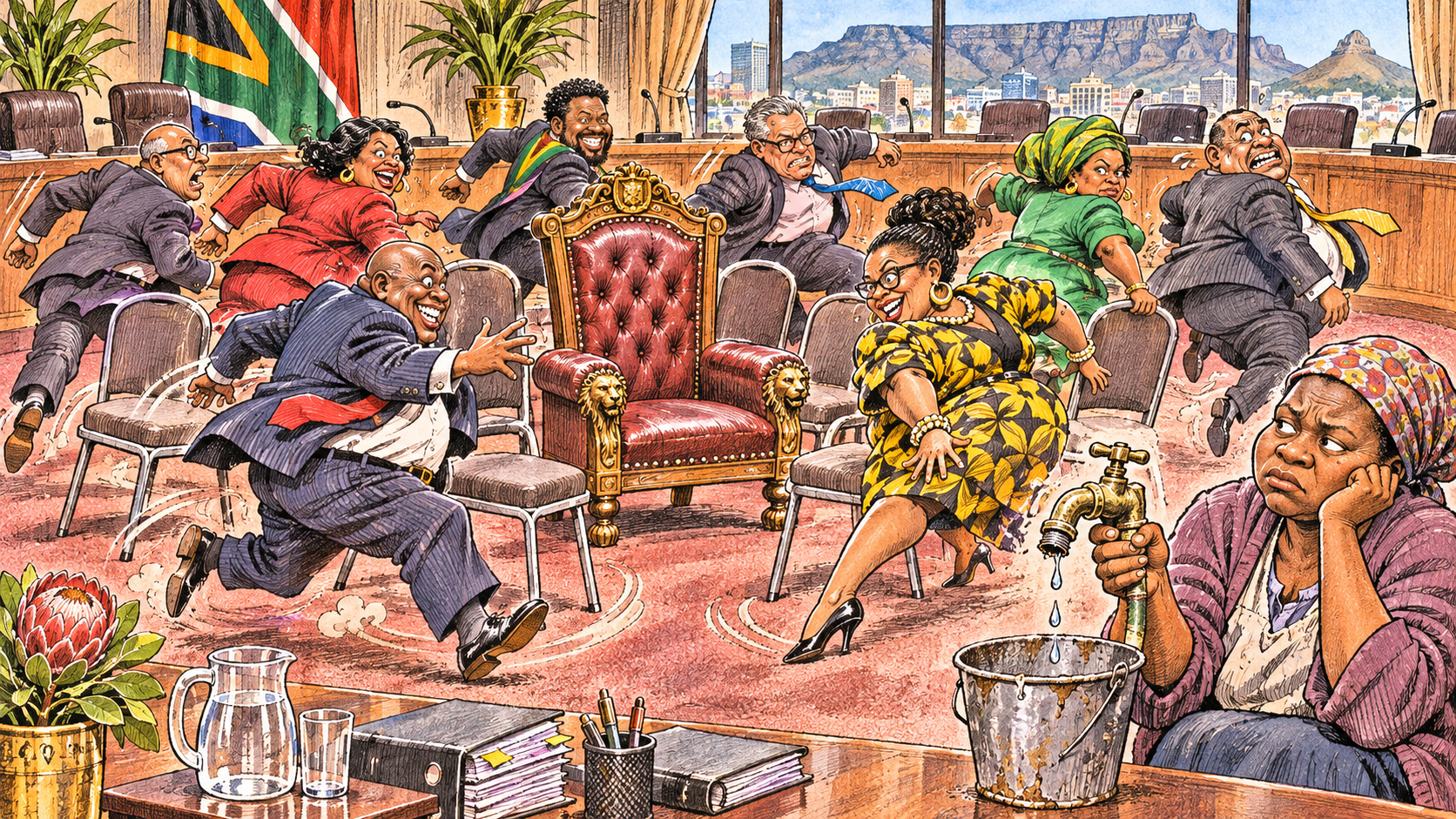
South Africa coalition talks have inspired SpinTaxi’s local government correspondent to request a small procedural change: when the music stops, whoever has the mayor’s chair must stay long enough to locate the maintenance budget. Several aspirants objected that this would substantially alter the purpose of the game.
The DA has proposed a stability framework covering 137 hung councils; it says the ANC has not yet responded. Read the DA’s published proposal for 137 hung councils.
The published proposal is a proposal, not a completed nationwide deal. Our satirical council has already formed a committee to prevent that distinction from spoiling the victory photograph. The committee contains representatives of every party and no one willing to stand behind the same person twice.
A hung council means no party holds an outright majority. It does not mean the town’s broken streetlight must be suspended indefinitely between rival interpretations of the election. Unfortunately, the streetlight has not secured representation in negotiations and is currently relying on a resident with a torch.
South Africa coalition talks reach the chair department
In the mock chamber, parties agreed that stability mattered. They then began a detailed discussion about which party would occupy the stable position. The clerk suggested measuring stability in uninterrupted service delivery. This was considered an interesting external benchmark and referred to the people responsible for external things.
A resident arrived with a photograph of a pothole. Every delegation promised to address it once governance arrangements were settled. The pothole responded by expanding, demonstrating the only consistent growth strategy in the room. It had now outlasted enough administrations to qualify as an institutional partner.

The mayoral chain became tangled during a rehearsal for the handover. Nobody could determine whether this was a wardrobe issue or a coalition model. An adviser suggested leaving the chain on the desk and rotating the officials around it, which would save time and preserve the appearance of continuity.
Coalitions can provide workable government when agreements are clear and partners can be held to them. The comic danger is treating the allocation of offices as the final output. Residents receive little comfort from a perfectly balanced photograph when the balance of water pressure remains deeply disappointing.
The pothole remains politically unaligned
SpinTaxi’s street-corner survey asked one shopkeeper what she wanted from the negotiations. She requested functioning basics and a person who would answer the telephone. The question was repeated to check reliability. She added that she would prefer the same person to answer next month.
Follow the real talks by distinguishing public offers, partner acceptance and binding governing arrangements. Read the responsibilities as closely as the allocation of positions. A council’s performance eventually appears in services and accounts, not merely in the number of parties that say a meeting was constructive.
The mock session concluded with agreement to buy heavier chairs, reducing the speed of leadership changes. The resident asked whether the procurement included asphalt. Officials said that belonged to the next phase. Outside, the pothole quietly accepted another vehicle and declined to endorse any candidate.
Editorial disclaimer: The world’s oldest tenured professor and a philosophy major turned dairy farmer form this dispatch’s disclaimer committee. They describe their work as an entirely human collaboration between two sentient beings. Their pothole remains available for office.