
THE TAKEOUT COUNTER
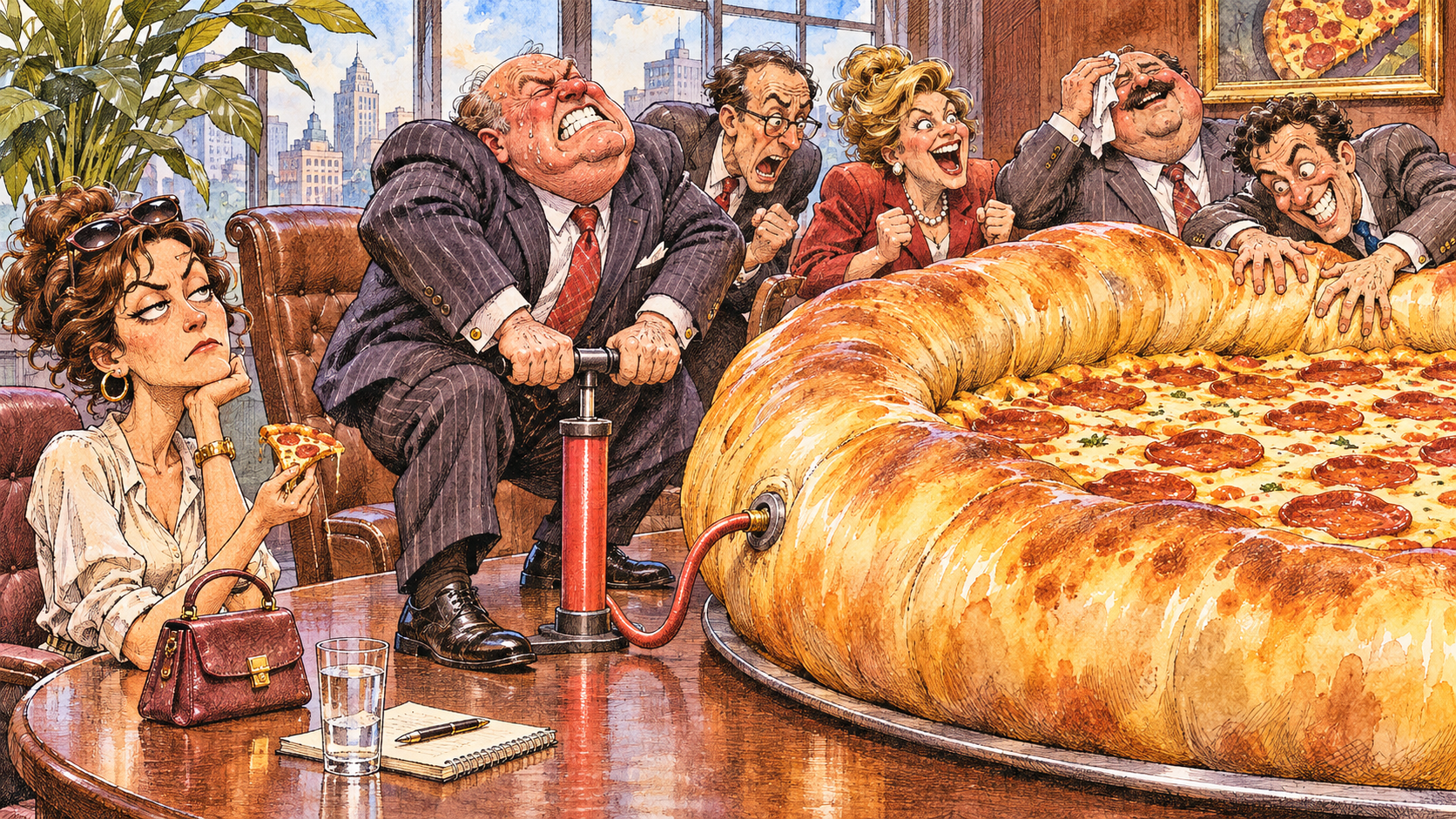
Pizza chain sales have prompted SpinTaxi’s emergency takeaway committee to confront the one market development nobody put in the business plan: customers can stop eating. Executives briefly considered understanding this, then ordered a larger crust with another product hidden inside it.
Kantar reports changing pizza preferences and reduced recent usage across most of the brands it tracks. Read Kantar’s research on changing pizza preferences.
The meeting began with a presentation about value. A family meal appeared affordable until the checkout added delivery, a service charge and a fee whose main service was appearing. The total reached the point where the customer expected the driver to stay and explain the children’s mathematics homework.
Smaller appetites are only one part of a complicated story involving budgets, alternatives and expectations. Our committee preferred a single villain because a multifactor analysis takes longer to chant at a quarterly meeting. Someone blamed salad. Someone else said salad had been suspicious for years.
Pizza chain sales enter the situation oven
A mock brand strategist proposed shrinking the customer’s dinner while enlarging the customer’s emotional relationship with the brand. The kitchen asked how many minutes to bake an emotional relationship. Finance suggested forty, provided it could be delivered inside a box and counted as an occasion.
The definition of value became contentious. To the diner it meant a satisfying meal at an acceptable price. To the presentation it meant a colourful bundle with enough conditions to require an adult witness. The diner won the argument by closing the app, an unusually powerful form of market research.

At the counter, a parent described how delivery competition had changed Friday night. The family could compare more restaurants, more prices and more ways to discover that nobody wanted the same thing. The one universal preference was avoiding another argument about whether the discount code included the dip.
Our tiny observational study involved watching one couple order dinner. They compared three menus, rejected two fees and made toast. This does not prove a national trend. It does establish that a household can leave a pizza company’s addressable market without leaving the kitchen.
The customer has already eaten the marketing budget
An executive finally suggested improving food and service. The room grew quiet, recognising a proposal with frightening implications for budgets previously assigned to naming new crusts. Someone asked whether ‘reliable delivery’ could instead be a limited-edition flavour. The driver said reliability was available, but management had never ordered it.
Customers need no grand theory to compare the final price, portion and delivery terms. Businesses need better evidence than blaming one change in eating habits for every weak result. Appetite, competition and household finances can all matter. A topping chart is not a causal model, however many arrows marketing draws on it.
The committee adjourned with an ambitious plan to put a smaller pizza inside a larger pizza and call the gap an experience. Outside, the customer chose a meal she actually wanted at a price she understood. Management described her decision as unpredictable consumer behaviour and commissioned another photograph of cheese.
Editorial disclaimer: The world’s oldest tenured professor and a philosophy major turned dairy farmer form this dispatch’s disclaimer committee. They describe their work as an entirely human collaboration between two sentient beings. Additional cheese is not an economic indicator.