
THE PETROL PUMP
Global oil prices have inspired SpinTaxi’s commodities desk to install two emergency buttons. One is for fear that the world economy will buy less oil. The other is for fear that less oil will reach the world economy. Both are red, which has simplified the desk’s interior design considerably.
Oil markets are balancing demand concerns against risks from continuing attacks on Middle East shipping and infrastructure. Read Reuters reporting on oil markets and shipping risks.
The real issues include demand expectations and supply risks. Our satirical trader explained them by placing an empty mug on one side of a scale and an empty coffee pot on the other. The motorist asked which outcome made the refill cheaper. He replied that the situation remained finely balanced and very well remunerated.
A growth scare can weigh on expected consumption. A threat to supply can push in the other direction. The market can respond to both at once because prices are not obliged to follow a television programme’s preference for one neat reason before the weather.
Global oil prices convene the competing panic desk
At the mock petrol station, an attendant displayed two explanations beside the pump without any prices attached. A customer chose the one about cheaper demand. The attendant said the explanations were informational and could not be redeemed against fuel. She asked whether they at least counted toward the loyalty scheme.
The trader described a geopolitical risk premium as an allowance for possible disruption. The driver described it as paying for a problem that might happen after already paying for several problems that had. Neither definition reassured the other, but only one could be delivered while holding a nozzle.

Shipping, refining, storage, taxes, currency and retail conditions can also affect what a driver ultimately pays. This chain makes crude oil commentary useful context rather than an instant receipt for the local forecourt. The desk briefly considered explaining this clearly, then received another invitation to describe the situation as a tug of war.
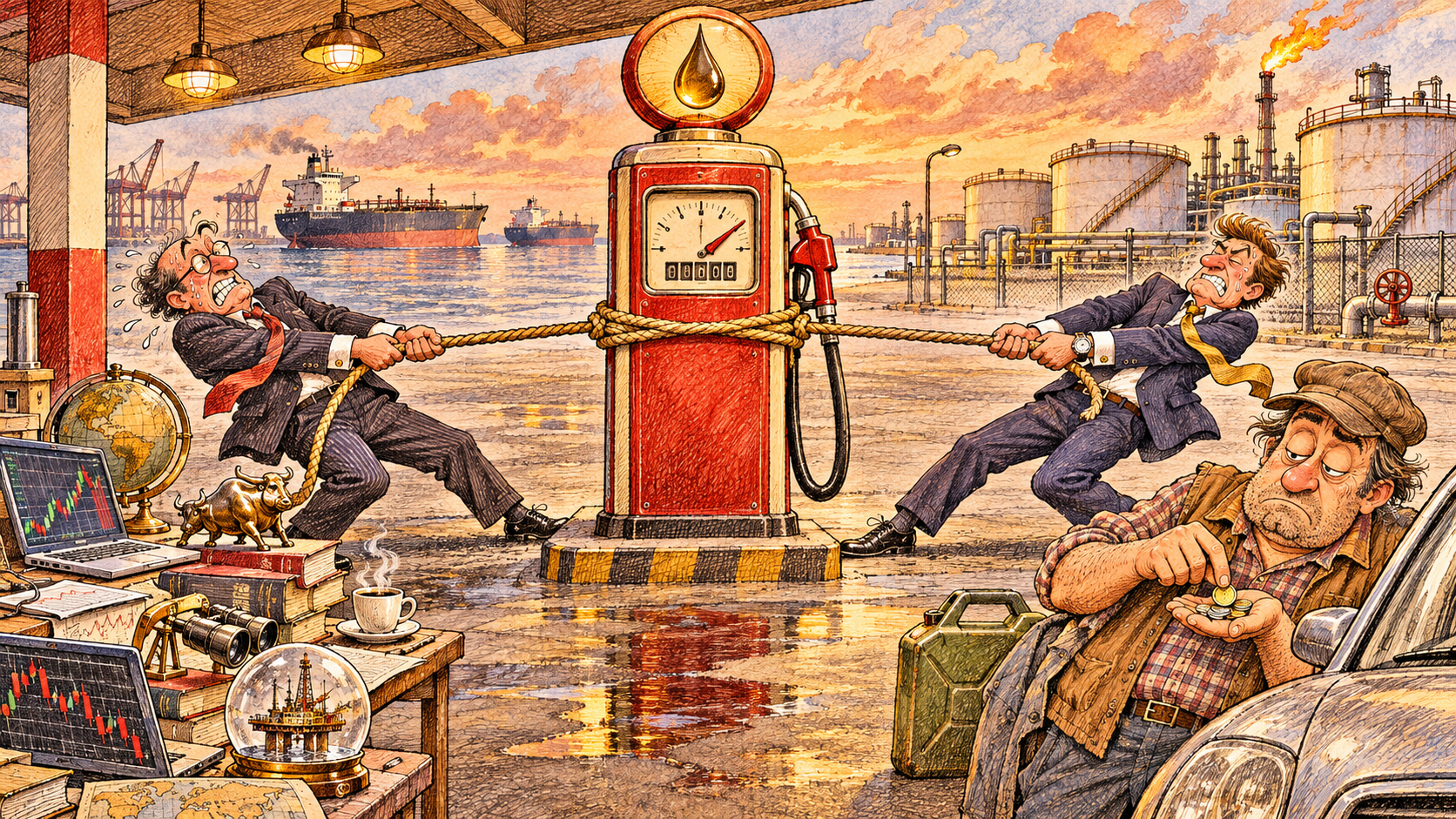
SpinTaxi staged the metaphor with two analysts pulling a rope attached to a pump. One shouted about weak growth; the other shouted about disrupted supply. The pump remained upright. A passing mechanic suggested the analysts might achieve more by taking turns helping people check their tyre pressure.
The pump has received both explanations
A commercial fleet manager in our comic scene tried budgeting with the commentary. On Monday the outlook was fragile. On Tuesday it was resilient but vulnerable. By Wednesday she had concluded that every adjective meant she should leave some room in the budget and answer more emails.
For readers, note the time and benchmark attached to any reported oil price, and distinguish futures from the price at a particular station. The market changes as evidence changes. A dramatic headline may describe a narrow move, and a local bill may reflect costs that entered the chain earlier.
The day ended with the desk announcing that prices were caught between opposing forces. The motorist thanked it for the update and filled the tank only halfway. Analysts called her behaviour a fascinating demand signal. She called it Friday’s grocery money and asked whether the signal could please stop clicking.
Editorial disclaimer: The world’s oldest tenured professor and a philosophy major turned dairy farmer form this dispatch’s disclaimer committee. They describe their work as an entirely human collaboration between two sentient beings. Their fuel receipt is the only binding forecast.