
TOKYO
The Japan oil stockpile is expanding under a Saudi arrangement that has finally vindicated everyone who ever said, “Don't throw that away; we might need it.”
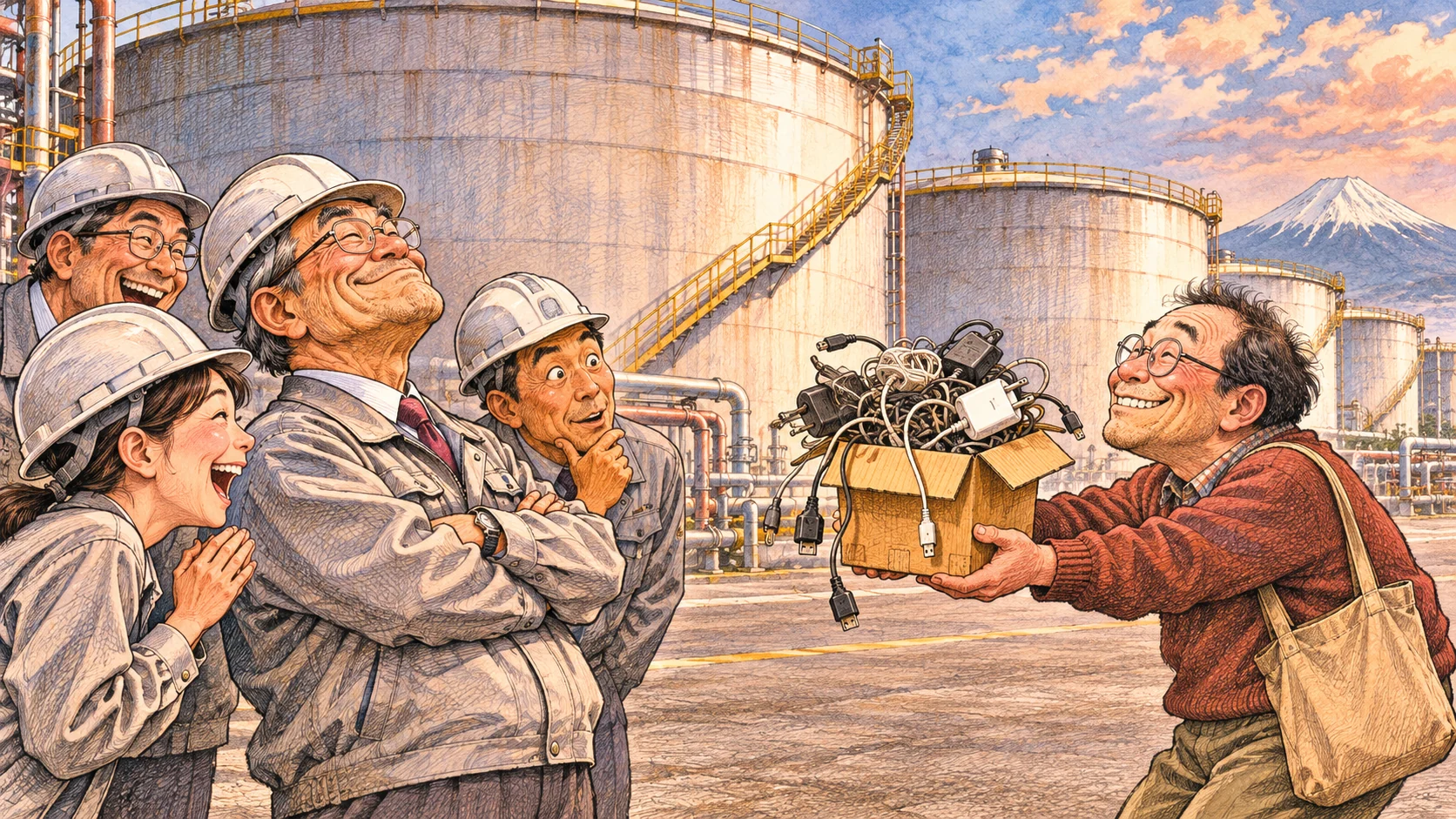
Reporting citing the Saudi Press Agency describes an increase in joint storage capacity from eight million to 24 million barrels. Spintaxi's household security correspondent immediately asked whether this meant his box of obsolete charging cables qualified for sovereign infrastructure funding.
News source: Reporting on the Saudi–Japan oil storage expansion.
The answer remains pending, although the cables have already hired a lobbyist.
Japan Oil Stockpile Gives Hoarding a Strategic Vocabulary
At an energy briefing at the briefing, reserve coordinator Kenji Cupboard explained that governments store oil because supply can become uncertain. Families store cracked lamps because admitting a bad purchase is emotionally difficult. Both activities require space, but only one reliably powers a refinery.
“My wife calls it clutter,” said visiting amateur reserve manager Doug Shelf. “I call it a diversified portfolio of possible future adapters.”
He had brought a suitcase full of remotes belonging to appliances that no longer existed. The delegation thanked him for demonstrating the difference between physical volume and national usefulness.
An oil reserve is a buffer: material held back so a disruption does not instantly become an empty tank. A household buffer is similar, except it often consists of twelve toilet rolls and an argument about whose turn it was to shop.
The Nation's Emergency Garage Gets an Upgrade

Spintaxi's proposed storage tour began beside a vast industrial tank. Shelf asked whether it contained Christmas decorations. An engineer explained that the contents could support energy security. Shelf replied that his decorations also supported security because nobody dared enter the garage after October.
The difference in scale did not trouble him. He recommended hanging the oil on hooks and keeping the good barrels behind the paint.
Our unscientific survey of one empty fuel can found it strongly favored having something in it. This was considered a promising piece of strategic analysis, though the can declined to forecast market prices.
The economists at the meeting offered a simple analogy: spare capacity and stored supply are like an umbrella. Owning one does not stop rain, and leaving it at somebody else's house can complicate the afternoon.
Energy Security Still Requires More Than a Bigger Tank
Storage capacity is the size of the cupboard; actual stock is what sits inside. Confusing the two is how a person announces dinner is covered because the refrigerator is enormous.
Readers can also distinguish a joint storage arrangement from an outright national purchase. They are related tools with different terms, ownership, and procedures. The linked reporting explains this arrangement more usefully than a photograph of serious people pointing at pipes.
Shelf proposed filling every unused space immediately. The engineers asked with what. He said they were losing the spirit of preparedness by becoming obsessed with contents.
At the end of the briefing, officials returned to work on supply resilience. Shelf returned home to an emergency of his own: his wife had booked a charity collection for Thursday.
He placed the charging cables under temporary strategic protection and announced that access would require bilateral consultation. His wife offered a counterproposal involving one cardboard box and a deadline with unusually strong enforcement.
Satirical disclaimer: Doug Shelf and his cable reserve are comic inventions. The world's oldest tenured professor and a philosophy major turned dairy farmer accept responsibility for the garage diplomacy; neither controls a barrel allocation.