
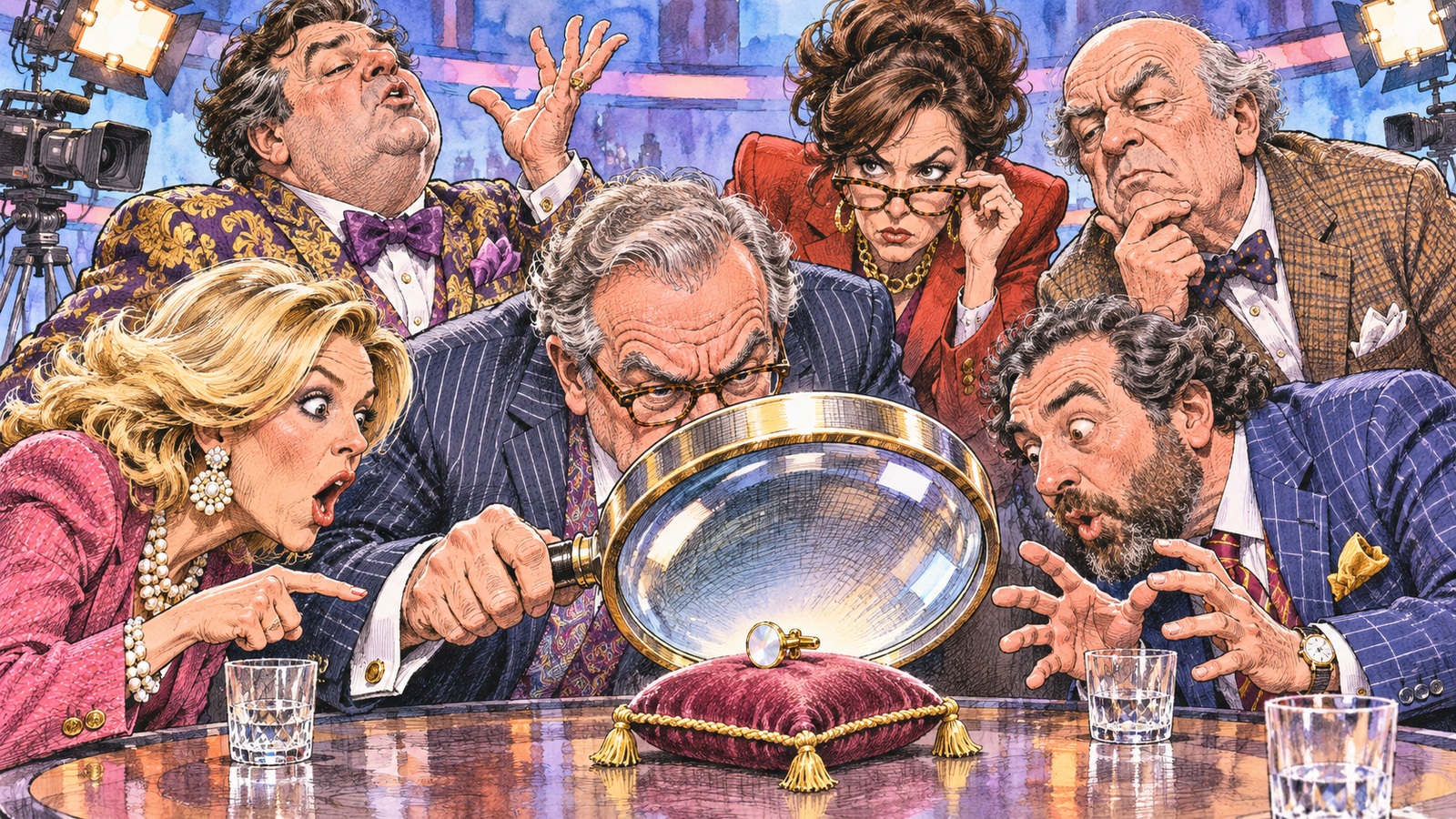
NORFOLK — The Anmer Hall cufflinks case has returned a formalwear accessory to public attention. Associated Press reporting on November 25 described charges relating to an alleged break-in at the royal residence. Charges are allegations, not convictions. SpinTaxi's imaginary fashion desk has restricted its investigation to a question the criminal courts do not need to decide: when did any of us last require cufflinks?
Anmer Hall cufflinks case meets the ordinary shirt
Fictional clothing customer Gary Sleeve remembers owning a pair somewhere between a graduation tie and instructions for an appliance he no longer possesses. He believes they came in a small presentation box, the traditional habitat of objects that spend most of their lives proving the owner once attended an occasion requiring a different shirt.
“Buttons have served me well,” Gary explained. “I had not realized my wrists were operating below the expected level of ceremony.” His wife pointed out that his favored shirt had a missing button. Gary rejected this as an unfair comparison between an established fastening system and one localized maintenance issue that was not relevant to the broader debate.
The real alleged burglary and legal process concern property and security, not comic guilt or collective blame. This article makes no claim about the defendants' eventual legal responsibility. Our invented fashion panel, television guests and consumer interviews are a separate joke about the way a news detail can suddenly become a national subject of expertise.
The accessory acquires a panel of experts
SpinTaxi's imaginary television producer, Felicity Studio, assembled a cufflink discussion with a royal correspondent, a style adviser and a man who had once buttoned his own sleeves on live television. Each was asked to explain what the accessory revealed about modern Britain. Gary suggested that it revealed a shirt with particular holes.
The style adviser described cufflinks as an expression of identity. Gary described his as a gift. These explanations proved compatible after everyone agreed that identity occasionally arrives from an aunt who does not know what else to buy. Felicity requested a more dramatic disagreement, ideally one that could be continued after the advertising break.
An invented museum curator brought a magnifying glass to examine a sample pair. Gary assumed they were very valuable until the curator explained that the magnifying glass was mostly useful for television. The sample pair had been borrowed from a shop, returned promptly and treated with more care than Gary normally extended to anything smaller than his car keys.
The legal case continues beyond the wardrobe
Readers following the actual proceedings should rely on accurate court reporting and avoid turning allegations into verdicts. A formal accessory's appearance in the news does not change that basic obligation. Gary supports due process, particularly the process by which somebody locates the shirt before asking him to dress appropriately for an event.

At the fictional panel's conclusion, Felicity asked whether cufflinks could experience a revival. The adviser predicted renewed interest, the correspondent discussed tradition and Gary asked how much the shirt cost. This final question threatened to end the segment by introducing a practical concern for which nobody had prepared a sufficiently elaborate historical explanation.
Gary went home and searched his drawer. He found one cufflink, several foreign coins and a cable whose purpose nobody remembered. He declared the investigation a useful reminder to organize his possessions. His wife observed that the drawer had been discussed many times before, and recommended beginning with the abandoned button.
Source and editorial note
Anmer Hall cufflinks case — source reporting and announcement. News premises checked November 26, 2026. Named comic witnesses, imagined institutions and invented dialogue in this article are inventions, not evidence from the linked source.