
NEW DELHI
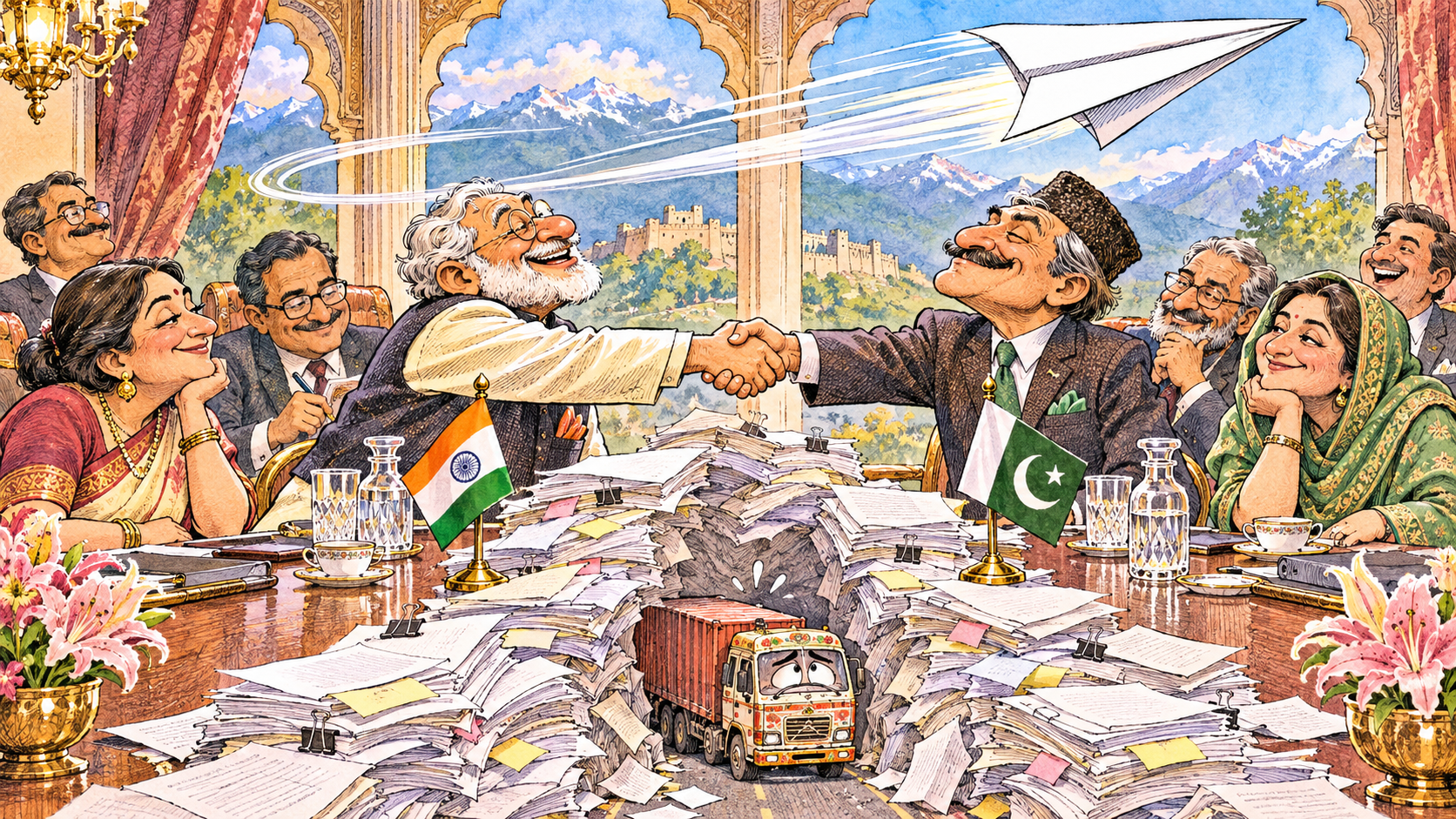
The Nepal India visit has inspired SpinTaxi’s diplomatic transport team to celebrate the fastest object in regional cooperation: the joint statement. It crossed desks, borders and inboxes before a practical connection could find the committee responsible for deciding which committee would discuss it.
Nepal’s Prime Minister Balendra Shah is visiting India, with cooperation including trade, connectivity and energy on the agenda. Read Nepal’s official account of the prime minister’s India visit.
The actual visit concerns a substantial relationship between neighbours. Our imaginary follow-up session concerns the equally substantial distance between announcing that people should connect and making the connection work. A trader arrived with a straightforward question about moving goods. He left with a bag containing four brochures about potential.
Officials in the comic meeting agreed to strengthen ties. Nobody could explain whether the ties required a customs declaration, but the phrase photographed well. A protocol officer placed it between two flags, where it immediately became a shared aspiration and therefore nobody’s individual deadline.
Nepal India visit speeds up the communiqué
Connectivity means the ability of people, goods, energy or information to move between places and systems. In ordinary life it is the road, the crossing or the working signal. In a diplomatic draft it can become so expansive that a person waiting beside a truck struggles to locate the part intended for him.
A mock freight driver proposed testing the policy by actually sending something. The room appreciated his ambition and created a pilot programme to identify an appropriate test object. He suggested the paperwork already on the table. Legal worried that it might return stamped ‘further clarification required’.

The infrastructure presentation featured a handsome bridge. An engineer asked about specifications and financing. The communications team said those details made the slide less balanced. The engineer explained that balance was unusually important in a bridge, a comment entered into the minutes as a technical reservation.
People-to-people relations proved more efficient. Two delegates found that their families had been trading, visiting and arguing cheerfully for years. Their experience suggested cooperation could be built through ordinary practical activity. The meeting thanked them and asked them to wait outside while the phrase ‘ordinary practical activity’ was translated into institutional language.
The bridge awaits a meeting about the bridge
An economic adviser correctly pointed out that agreements, investment and planning take work. The problem is not that negotiations exist. It is that a polished announcement can conceal whether the work has advanced. A photograph of a handshake proves that two hands met. Roads require a considerably longer chain of evidence.
For businesses and travellers, the useful follow-up is which specific rules, projects or access arrangements have changed, when they take effect and where the details are published. A proposed improvement is worth watching. It is not yet a timetable, a permit or an available electricity connection.
The meeting ended with unanimous approval of a warm and comprehensive statement. The trader used his copy to shade a parcel waiting for clearance. At last, the document performed a direct logistical function. Officials called the result an early harvest of regional cooperation and requested a second photograph.
Editorial disclaimer: The world’s oldest tenured professor and a philosophy major turned dairy farmer form this dispatch’s disclaimer committee. They describe their work as an entirely human collaboration between two sentient beings. Their bridge budget does not cover the model.