
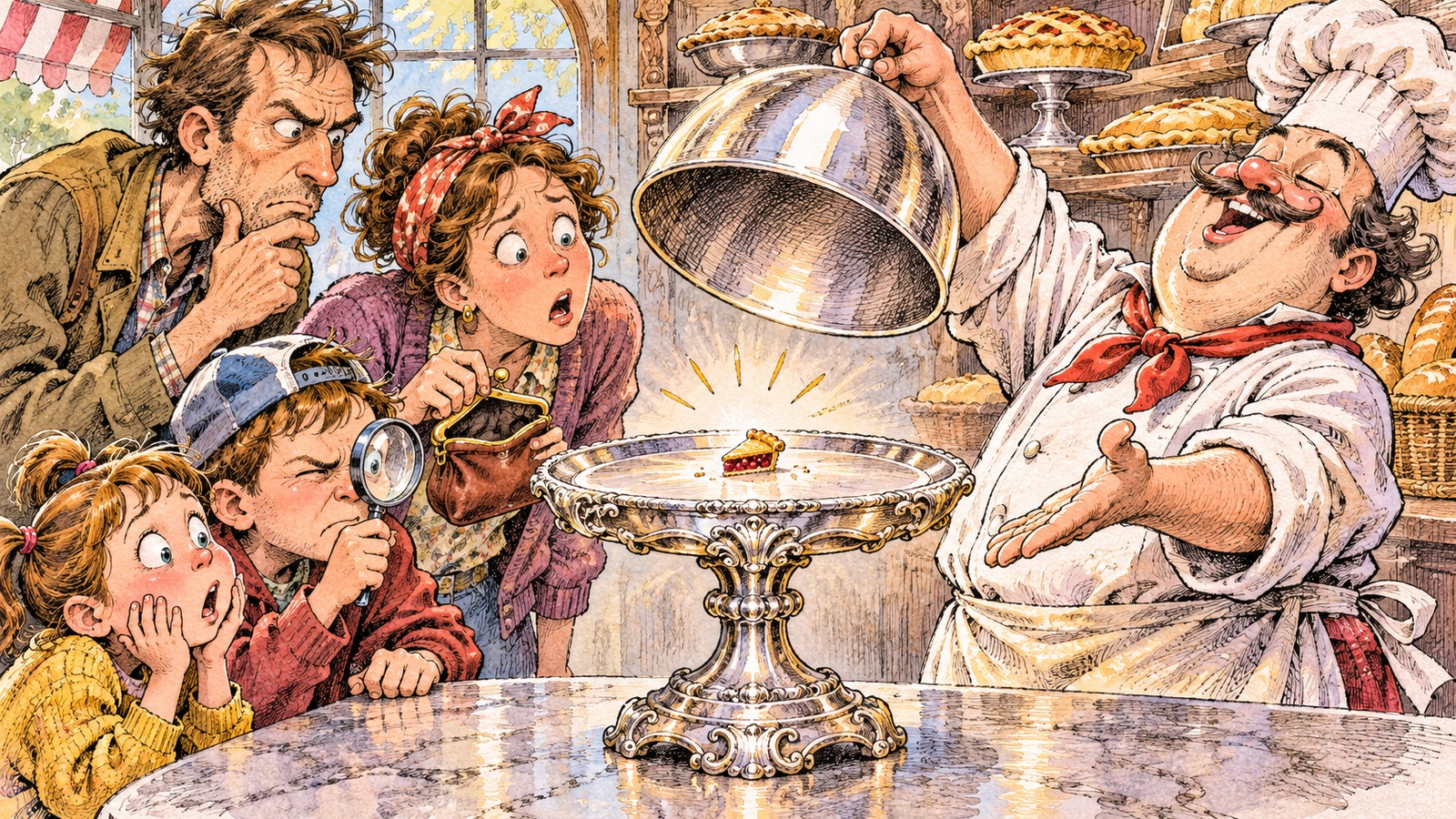
NEW YORK — Proposed US sugar tariffs could increase costs for American buyers, according to Reuters reporting on November 25. The proposal is not a universal new checkout price already in force. Nevertheless, SpinTaxi's imaginary holiday bakery has begun dividing every slice of pie into an edible portion and a geopolitical explanation.
US sugar tariffs arrive at the dessert table
Fictional baker Edna Crumble says customers once asked whether her cakes contained nuts. They now ask whether the frosting contains an unfavorable bilateral relationship. “I trained to separate eggs,” she said. “Nobody warned me I would also need to separate domestic production policy from the price of birthday candles.”
The reported proposal would add a levy to certain raw sugar imports outside lower-tariff arrangements. Existing quotas and trade terms matter. Edna therefore refuses to calculate a household's precise future grocery increase from a headline, preferring the traditional bakery method of admitting that she does not know what Washington will do next.
Her imagined competitor has adopted a premium strategy. His new cake comes with a tiny flag, a lengthy explanation and the same amount of butter. He calls it a Sovereignty Sponge. Customers have asked whether they can purchase the earlier, less nationally significant version in a box that closes properly.
A spoonful of policy helps the invoice go up
At SpinTaxi's fictional dessert forum, protectionism advocate Walter Spoon insisted that the nation must defend its sweetness. Budget-conscious customer Linda Receipt agreed that producers matter but wondered why the defense perimeter ran directly through her shopping basket. Both accepted a biscuit, establishing the evening's only immediately measurable trade agreement.
The economic argument involves competing interests: producers, refiners, food manufacturers and consumers do not all experience a tariff in the same way. Our comic committee addressed this complexity by placing name cards around the pie. It then discovered that nearly everybody believed somebody else should absorb the cost of cutting it.
Edna has considered reducing sweetness, but refuses to market that decision as a medical breakthrough. A less sugary cake can still be expensive, disappointing or both. She also declines to describe policy-driven ingredient substitution as an exciting opportunity for customers to explore their relationship with flour. Customers came for cake, not personal growth.
Holiday baking acquires a foreign affairs desk
There are sensible ways to manage a baking budget: compare actual shelf prices, check quantities and avoid buying ingredients for an imaginary audience of forty. None requires accepting our invented bakery's suggestion that a muffin should arrive with a classified briefing. Real future prices remain dependent on what is adopted and how markets respond.

Walter proposed relabeling the smallest cupcakes as strategic reserves. Linda asked whether reserves were cheaper by the dozen. The baker explained that the economy remained complex, but the dozen was still twelve, a rare instance of a familiar institution surviving a meeting with financial experts without changing its definition.
By closing time, Edna had written one practical message on the counter: ask before assuming the proposal has already changed the bill. Beneath it she placed a single display biscuit under glass. Customers admired the presentation until she explained that the glass was there because people kept eating the evidence.
Source and editorial note
US sugar tariffs — source reporting and announcement. News premises checked November 26, 2026. Named comic witnesses, imagined institutions and invented dialogue in this article are inventions, not evidence from the linked source.