
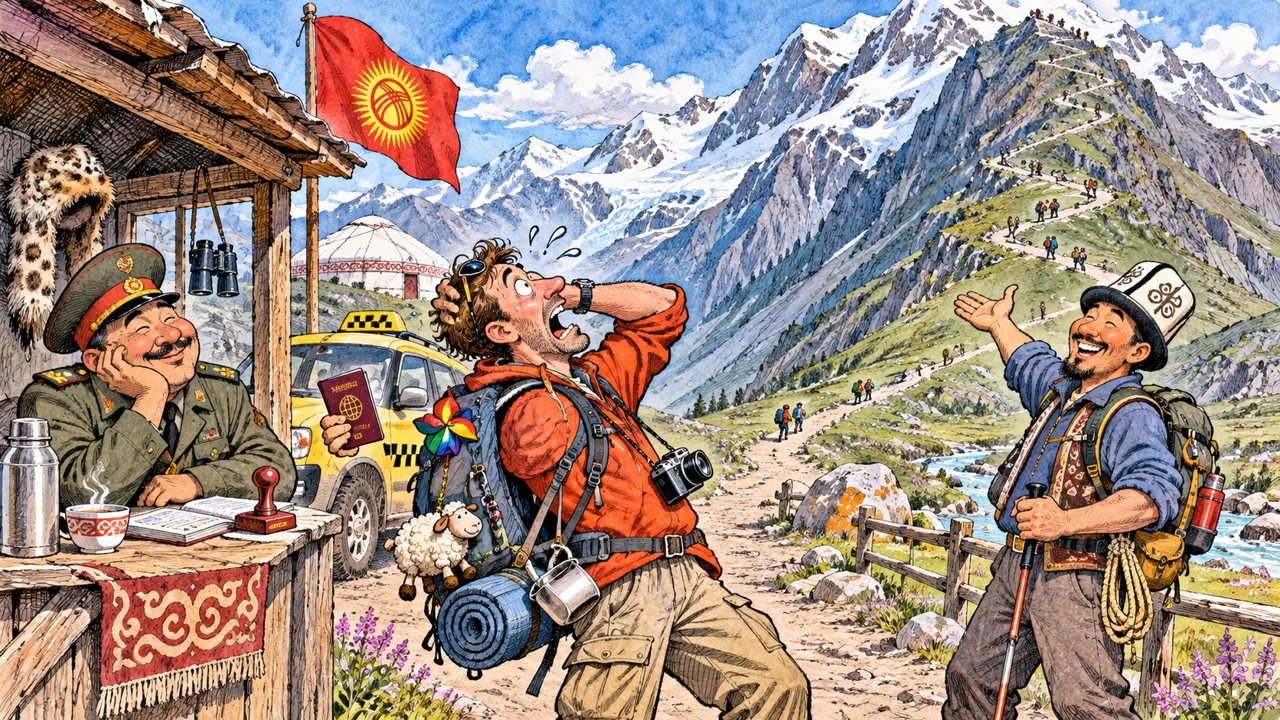
BISHKEK — Kyrgyzstan visa-free travel proposals have delighted prospective visitors, although the country’s mountains have declined to waive their longstanding requirement that tourists walk uphill.
Kazinform’s report on the proposed visa changes describes an expansion to 18 additional countries and a longer permitted stay. The measures remain proposals. The steepness of the landscape, by contrast, appears to have completed its approval process.
Kyrgyzstan visa-free travel stops at the trailhead
“I had assumed removing barriers included these,” said visitor Colin Flatland, pointing at an entire mountain range. He had packed three shirts, a portable espresso maker and shoes selected for looking outdoorsy in an airport lounge.
His guide explained that easier entry paperwork did not alter altitude. Colin asked whether altitude could be reduced through a premium booking. The guide offered to carry his espresso maker, a service Colin described as an encouraging first step toward liberalization.
Tourism consultant Vera Itinerary said longer stays could help visitors enjoy the country at a sensible pace. Colin interpreted this as official recognition that he would need several days to recover from walking to the guesthouse dining room.
The mountain declined requests for comment. Observers noted that its communications strategy was unusually consistent: it stood there, making its position perfectly clear, without issuing a single twelve-page statement about accessibility of the summit experience.
Acclimatization cannot be downloaded
Colin initially tried to accelerate acclimatization by opening a fitness app. The app congratulated him for beginning his journey and offered a paid subscription. His lungs offered no equivalent welcome package, although they did provide immediate and detailed feedback.

At the first rest stop, he asked the guide how local people managed the terrain. “Preparation,” she said. Colin was disappointed to discover that a one-word answer could contain more practical information than his entire adventure lifestyle newsletter.
The longer proposed stay also raises a welcome possibility: travelers could spend time in communities instead of rushing through them to collect photographs. Colin agreed wholeheartedly, provided the community had somewhere to sit with tea and admire a mountain from its less demanding lower end.
The passport gets a holiday too
A fellow hiker celebrated the prospect of fewer forms. Her passport had previously accumulated so many supporting documents that it required its own carry-on allowance. She hoped to replace paperwork with actual travel, an eccentric preference travel administrators are still studying.
The Kabar national news agency is among the sources travelers can consult for developments. Visitors should check final entry rules before relying on any proposal; an enthusiastic headline has never successfully negotiated a border inspection.
By evening, Colin had abandoned his original summit timetable and adopted the guide’s measured pace. He described the change as a strategic pivot rather than admitting his knees had submitted their resignation.
The mountains welcomed his revised plan by remaining exactly where they were.
Editorial disclaimer: Colin, Vera and their uphill policy negotiations are SpinTaxi inventions. The linked visa reporting concerns a proposal, not a guarantee of entry or an exemption from gravity.