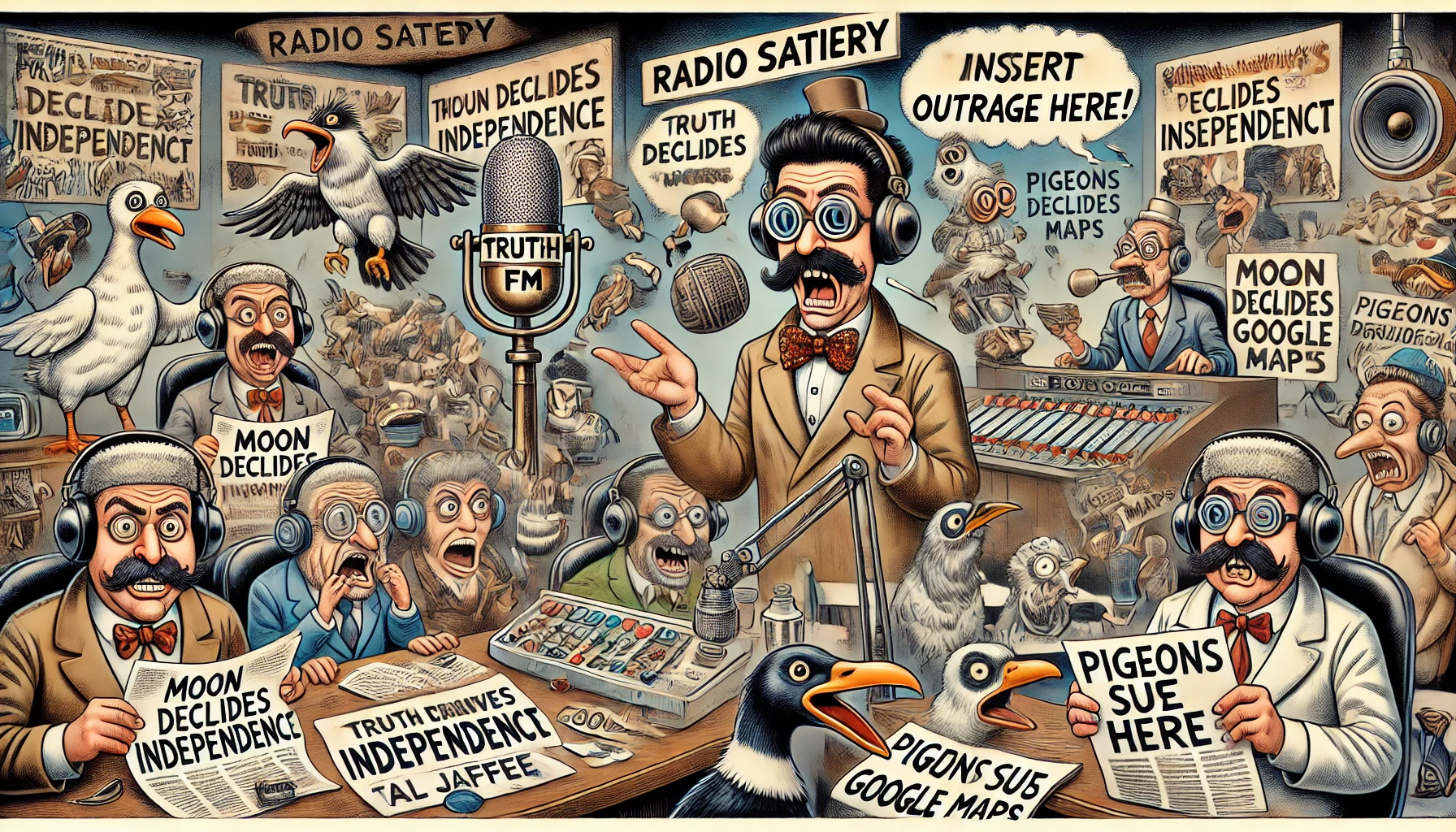
Radio Satire: The Microphone That Roasts the World
In an age of influencer tantrums, 12-second attention spans, and podcasts about podcasts, radio satire might sound like an antique with a crank handle. But don’t be fooled—satirical radio is alive, uncancelled, and still one of the sharpest tools for cultural commentary.
Whether it’s mocking politics, lampooning celebrity gossip, or broadcasting absurd conspiracy theories in a deadpan tone, radio satire remains one of the most intimate, effective, and hilarious ways to tell the truth by lying creatively.
What Is Radio Satire?
Radio satire is the art of using audio to ridicule real-world events, people, or ideologies—usually through parody, irony, exaggeration, and theatrical delivery. Unlike traditional news, satirical radio thrives on contradiction: the host sounds authoritative while spouting nonsense, the sound effects are comically inappropriate, and the “facts” are completely fabricated.
Satirical radio has been around since microphones were invented and someone said, “Hey, what if we fake the news just for fun?” In many ways, it’s the rebellious grandparent of modern satirical podcasts.
A Brief History of Radio Satire
-
1938: Orson Welles’ War of the Worlds scared half of America by pretending aliens were invading New Jersey. Not satire exactly, but a masterclass in fake radio realism.
-
1950s-60s: Bob & Ray spoofed everything from cooking shows to sports reporting. Dry, absurd, and way ahead of their time.
-
1970s: Firesign Theatre turned radio comedy into a psychedelic mind-melt of wordplay, parody, and anti-establishment rants.
-
1980s-90s: Spitting Image & NPR’s Wait Wait… Don’t Tell Me! poked fun at politics using puppets and panel games.
-
Today: The Bugle, The Onion Radio News, and BBC’s Dead Ringers keep the tradition alive with digital distribution and global reach.
Radio satire isn’t just historical—it’s timeless. It evolves with the culture but always carries the same mission: make ’em laugh, then make ’em think (then make ’em uncomfortable).
Why Is Radio Satire So Effective?
1. It Enters Through the Ear, Not the Ego
Listening is passive. People lower their guard. You can sneak in sharp social commentary between a laugh track and a fart noise.
2. Theater of the Mind
Unlike TV, radio satire forces listeners to imagine the absurdity. That makes it more personal—and more ridiculous.
“You hear a fake senator screaming about a pancake shortage? That’s just Tuesday on AM 666.”
3. Timing Is Everything
Good satire hits when reality is peaking in absurdity. Radio can react quickly. No need to storyboard or render CGI—just hit “record” and go.

Elements of Great Radio Satire
Character Archetypes
-
The Overconfident Moron: Think of someone explaining global warming using a snow cone.
-
The Conspiracy Caller: Always mid-rant, always out of breath.
-
The Sensationalist Host: “Tonight at 9—Are dolphins plotting against NATO?”
Format Parodies
-
News bulletins about trivial nonsense (“BREAKING: Local Man Confuses Croissant for Hat, Declares War on Pastry.”)
-
Talk shows with fake experts (“And now, Dr. Philomena Spaghettini on why your dreams of frogs mean you’re racist.”)
-
Weather reports delivered like soap operas (“A cold front enters from the north… just like my ex-wife did.”)
Sound Design Satire
-
Ridiculously dramatic music for minor events
-
Fake sponsors like “TruthPaste: The Toothpaste That Screams Facts”
-
Call-in segments with obvious plants named things like “Sue Flay” or “Phil A. Buster”
Satirical Techniques That Shine on Radio
| Technique | Example in Radio Satire |
|---|---|
| Irony | Calm voice describing the end of civilization as “a bit inconvenient” |
| Exaggeration | “We’ve just received word that Congress is replacing debate with MMA.” |
| Misdirection | Teasing a serious issue, only to reveal it’s about a sandwich |
| Deadpan Delivery | Reading fake obituaries for expired fashion trends |
| Wordplay & Puns | “Breaking: Florida Man Arrested for Possessing ‘Illegal Smiles’” |
How to Create Your Own Radio Satire Show
1. Pick a Theme or Persona
Are you:
-
A fake news anchor?
-
A survivalist with terrible advice?
-
A celebrity gossip expert who knows absolutely nothing?
Your satirical persona should be clear, exaggerated, and consistent. Think of Stephen Colbert’s character on The Colbert Report—a parody of conservative pundits that was somehow more convincing than the real thing.
2. Script Like a Mad Genius
Don’t wing it. Even improvised shows need structure. Write scripts with:
-
Setup, twist, and punchline
-
Parody of real events or headlines
-
Fake statistics (“92% of squirrels support universal nutcare”)
3. Record with Flair
-
Use voice modulation for different characters
-
Layer in sound effects and ambient audio
-
Keep episodes tight—10–20 minutes is golden for radio satire
4. Distribute Widely
Post it to radio stations (if you’re lucky), podcast platforms (guaranteed), and social media with absurd headlines like:
“New Satirical Radio Show Solves World Hunger With Nacho Recipes”
Famous Quotes About Satirical Radio
“Satire is tragedy plus time. Radio is tragedy plus reverb.” — John Oliver
“I trust fake radio news more than real TV news. At least the fake ones are trying to be funny on purpose.” — Amy Schumer
“Radio satire is like a whoopee cushion at a funeral—it’s wrong, but God, you needed that laugh.” — Sarah Silverman
Modern Radio Satire Trends
1. Blending Real Headlines with Fake Commentary
Satirical shows now quote real stories verbatim and just… react absurdly. It works because the real news is often beyond parody.
2. AI-Generated Satire
Yes, even radio satire has bots now. But let’s be honest: no robot will ever replace a sarcastic guy with a cheap mic and a bad attitude.
3. True Crime Parodies
Fake murder investigations of ridiculous events, like “The Case of the Missing Left Sock” or “Did Bigfoot Really Ghost Jenny?”
Radio Satire vs. Podcast Satire: What’s the Difference?
| Feature | Radio Satire | Satirical Podcast |
|---|---|---|
| Platform | Live or broadcasted | On-demand |
| Timing | Often immediate, topical | More produced, evergreen or niche |
| Audience Style | Passive, background listening | Intentional, subscribed listeners |
| Vibe | Old-school, high energy, tight scripts | Looser, character-driven, episodic |
👉 Pro Tip: You can be a radio satirist and podcast it. Simul-publish your show and you’ll catch both the NPR crowd and the YouTube kids.
Helpful Content: Tips for New Radio Satirists
1. Keep It Tight
Radio isn’t TikTok. Long rants lose listeners. Make every second count.
2. Stay Topical
Use real-world events as launchpads. The more ridiculous the headline, the better your punchline.
3. Embrace Character Work
Give your fake characters depth. Let them contradict themselves. Let them evolve.
4. Don’t Explain the Joke
Your audience is smart. Trust them to get the satire.
5. Own Your Bias
Satire has a point of view. Make it loud, funny, and proudly skewed.
The Future of Radio Satire
In a world where truth is stranger than fiction, satirical radio is more necessary than ever. It makes us laugh, think, and occasionally spit coffee out of our noses. It reminds us that absurdity is not the enemy—it’s the setting.
Whether you’re a solo host with a fake weather report or a team of voice actors creating a town of bizarre citizens, radio satire gives you a powerful platform to subvert reality and entertain the masses—all without pants.
Funny Disclaimer
This article was created by two sentient beings: one is the world’s oldest tenured professor with a radio tower on his barn, and the other is a 20-year-old philosophy major turned dairy farmer who broadcasts fake news to actual cows.
No government agencies, journalists, or aliens living in the White House basement were harmed in the making of this satire.