
BRUSSELS
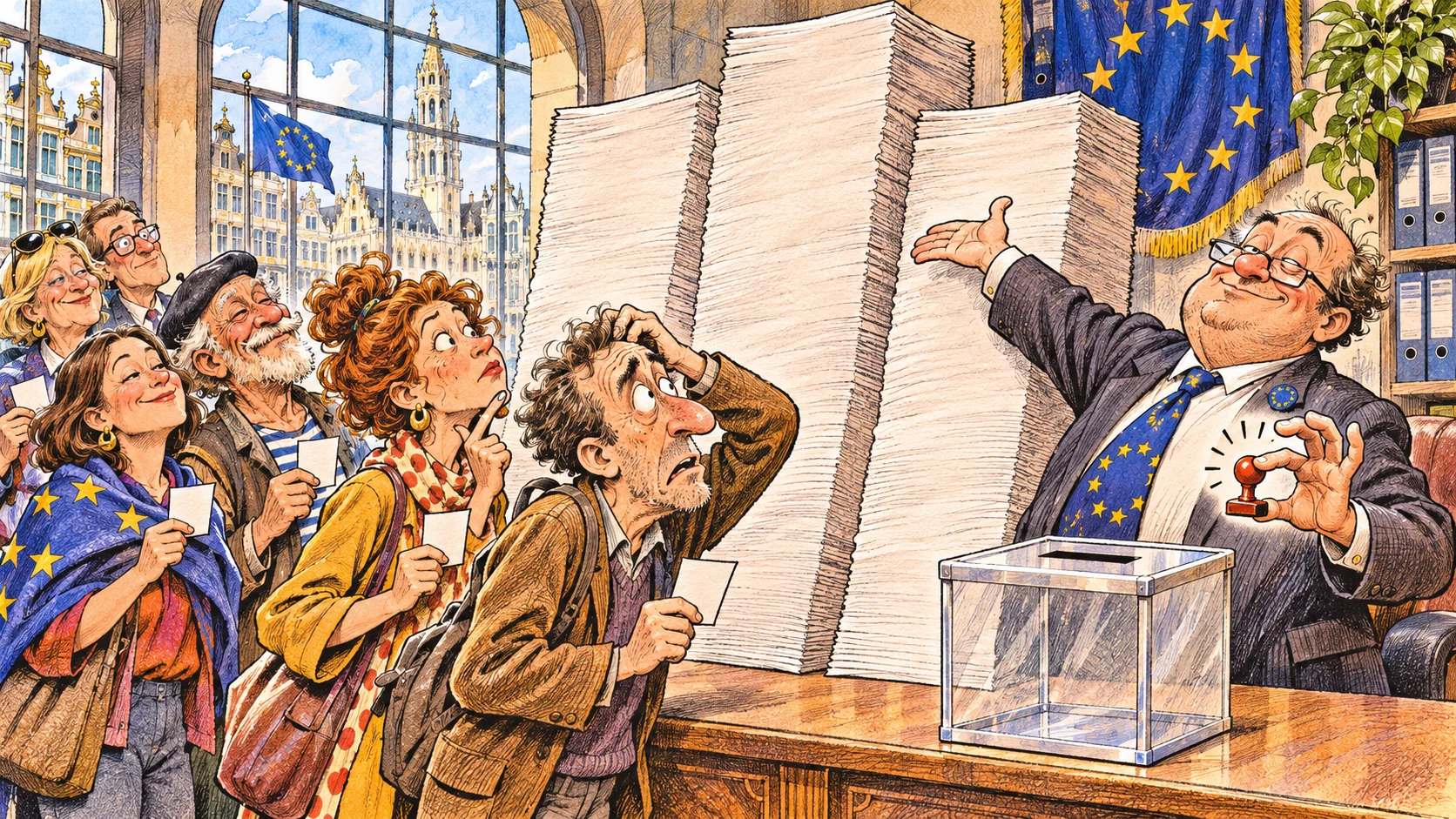
The Europe election supercycle has begun attracting alarmed analysis, prompting Brussels to ask whether voters intend to provide advance notice before changing the people sent to meetings.
Current reporting describes a run of national elections that could affect the European Union's direction. Spintaxi's continental administration desk has responded with a proposed Democratic Change Notification Form, available in three copies and several tones of institutional concern.
News source: Reporting on Europe’s approaching national election cycle.
Europe Election Supercycle Tests the Ballot's Filing Status
“We welcome public participation,” said continuity adviser, Clara Procedure. “We simply need it to arrive in a format compatible with the existing seating plan.”
Her office had spent years arranging nameplates. A surprising election result could force somebody to move one, which she described as an avoidable period of uncertainty.
The word supercycle makes democracy sound like an appliance setting. Ordinary voting becomes a dramatic continent-wide rinse, with analysts debating whether the center will survive the spin.
A voter at the meeting asked whether the same attention might be given to housing, purchasing power, and whether anything worked at the local office. Clara assured him these concerns were central to the stakeholder narrative. He said the boiler preferred cash.
Coalition Building Now Comes With Spare Screws
Spintaxi's proposed coalition kit includes a small table, several incompatible promises, and assembly instructions translated by a person who believes “temporary” means “until the next disagreement.”
A party can win votes and still need partners. Partners can sign an agreement and still disagree. These are normal democratic complications, though the language used to describe them often suggests engineers have discovered a crack in the continent.

Our unscientific survey of one ballot box found it willing to accept every eligible vote without first consulting an analyst. Clara called this a courageous but insufficiently coordinated position.
The box responded that it had been hired for a relatively specific task.
The Useful Questions Behind the Alarm
National elections are distinct contests. Their consequences depend on results, governing alliances, legal powers, and the positions governments actually take afterward. A headline about a sweeping trend cannot replace looking at each country's institutions and voters.
It is also possible for people to favor cooperation while disliking how particular decisions are made. A restaurant customer can want dinner to continue and still ask why the manager has spent an hour explaining the seating strategy.
Clara agreed to acknowledge this nuance, provided it did not require a different template.
At our emergency briefing, officials considered asking the public to explain any changes in political preference using the comments field. The public asked whether officials might instead read the previous comments field, which had been full for years.
This created a lively debate about archives.
By closing time, the administration had established a working group to prepare for whatever voters decided. Its first recommendation was that voters decide something manageable.
The ballot box remained silent. It had already mastered the skill the briefing needed most: allowing other people to put something in before announcing what they meant.
Satirical disclaimer: Clara Procedure and the democratic filing system are satire. The world's oldest tenured professor and a philosophy major turned dairy farmer accept responsibility for the paperwork jokes; voters supply their own decisions.